FilmDecoder
Designed and Developed by: Yujia Huo
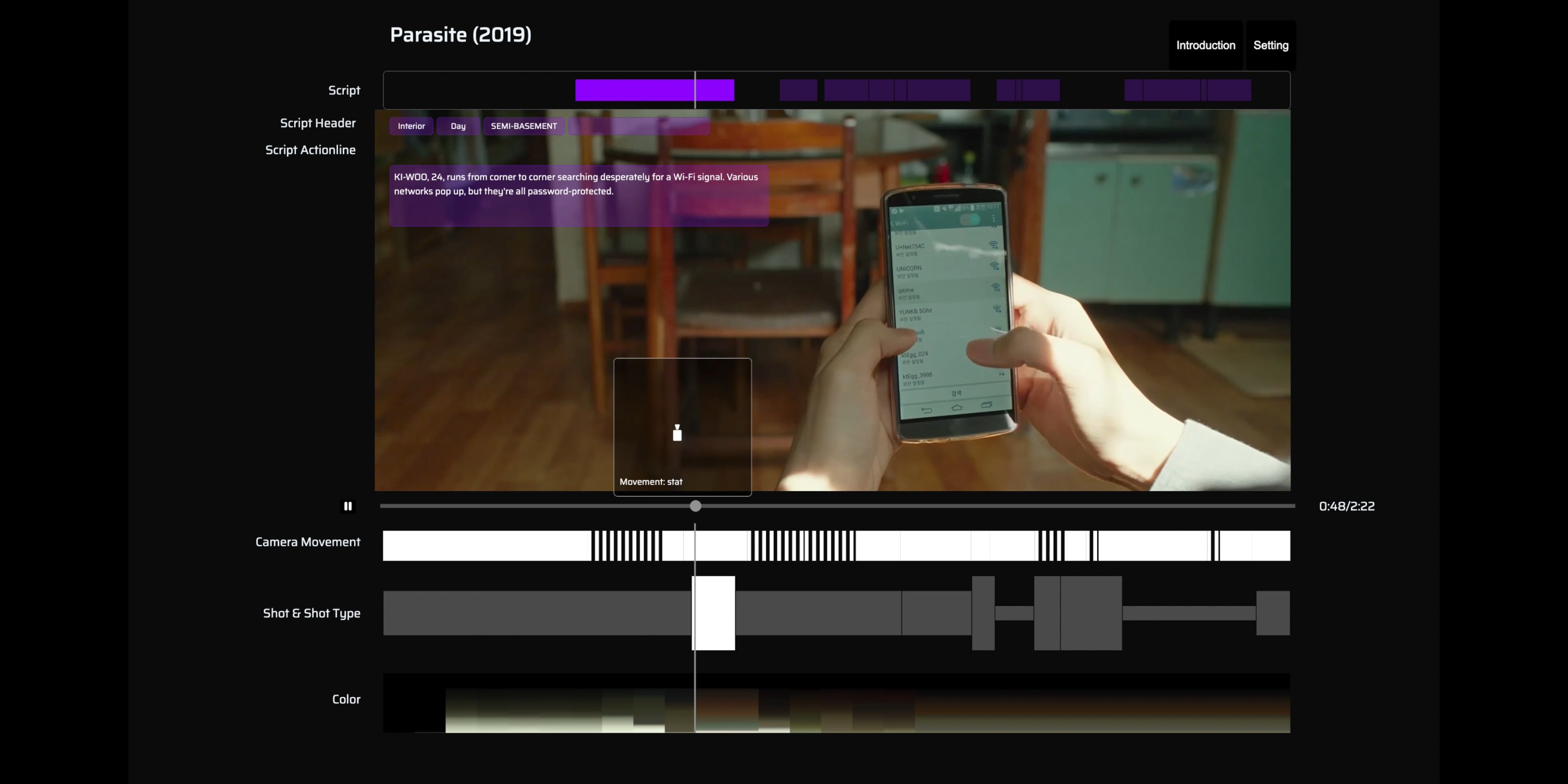
View the project
Layout
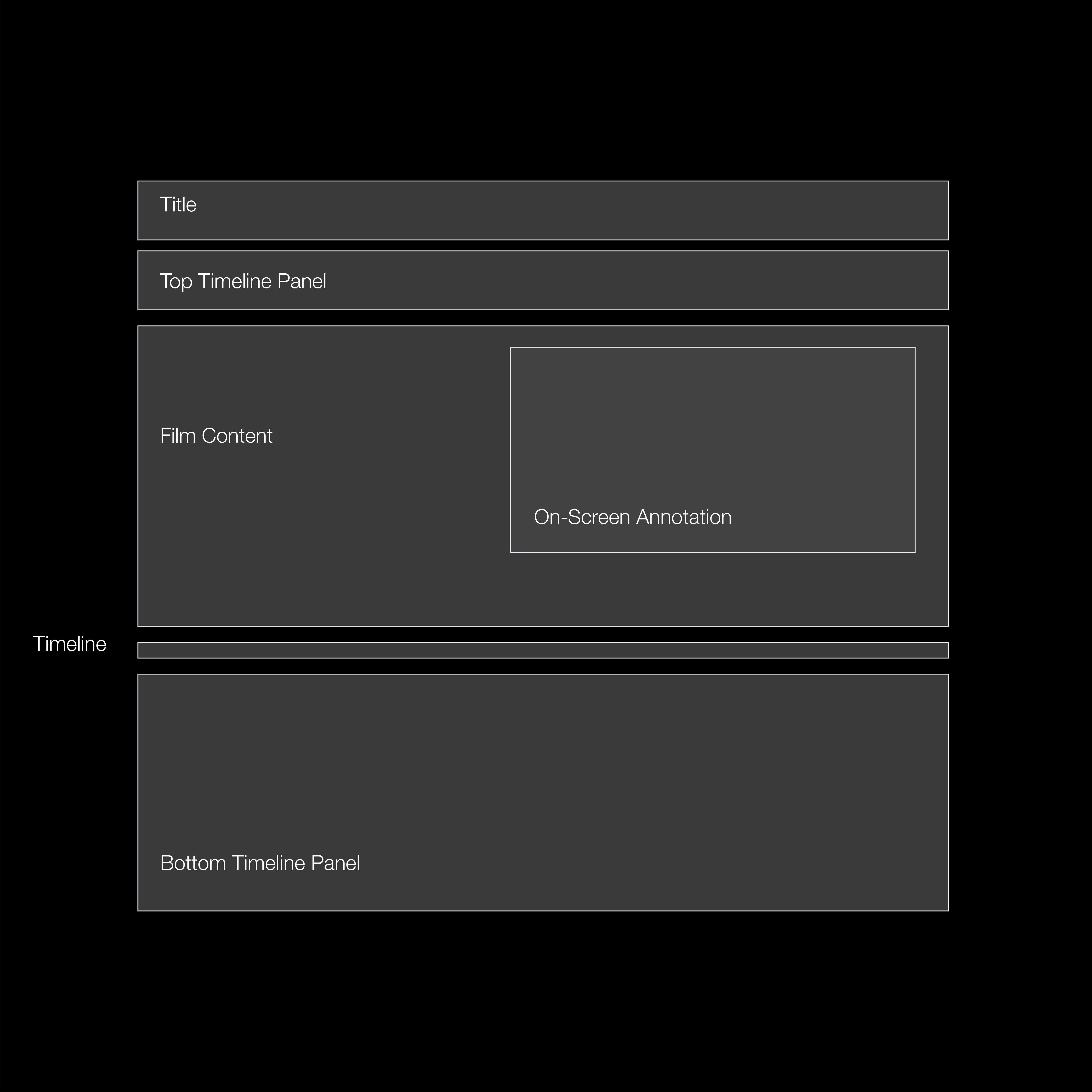
The design of FilmDecoder's layout, encompassing the Film Content, Top Timeline Panel, On-Screen Annotation, and Bottom Timeline Panel, is driven by the aim to maximize the viewer's understanding of film elements. This layout is meticulously crafted to minimize cognitive load, facilitating a seamless comparison of various film elements.
Design Philosophy The integration of these distinct areas within the platform is guided by a philosophy of balance—leveraging the strengths of each component while mitigating potential drawbacks when used in isolation. The layout is thoughtfully arranged to support an intuitive flow of information, making complex film data accessible and engaging for users.
Top and Bottom Timeline Panels Serve as the primary conduits for presenting high-level information, enabling an overview and temporal tracking of film elements. These panels are designed to complement each other, offering a scaffolded approach to data interpretation.
On-Screen Annotation This feature is designed to bridge the high-level insights offered by the timeline panels with detailed, in-depth analysis. It aims to spotlight specific elements, drawing the viewer's attention to nuanced details and fostering a richer understanding of the film content.
Data Representation
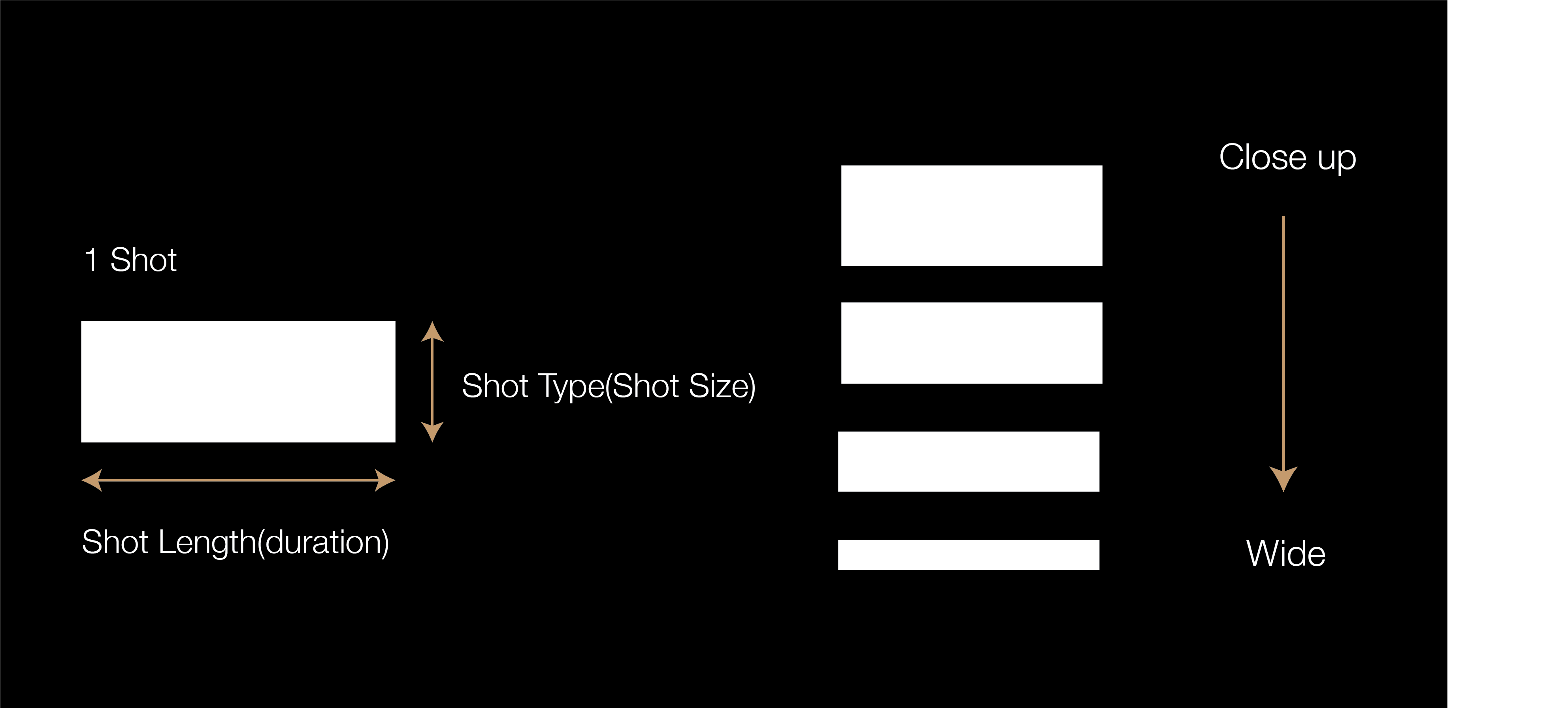
Shot Length and Shot Type
Leveraging the established visual representation of shot length—where each bar's length and position on the timeline signify the duration and chronological sequence of shots—the design encodes shot type information through the height of each bar.
Color
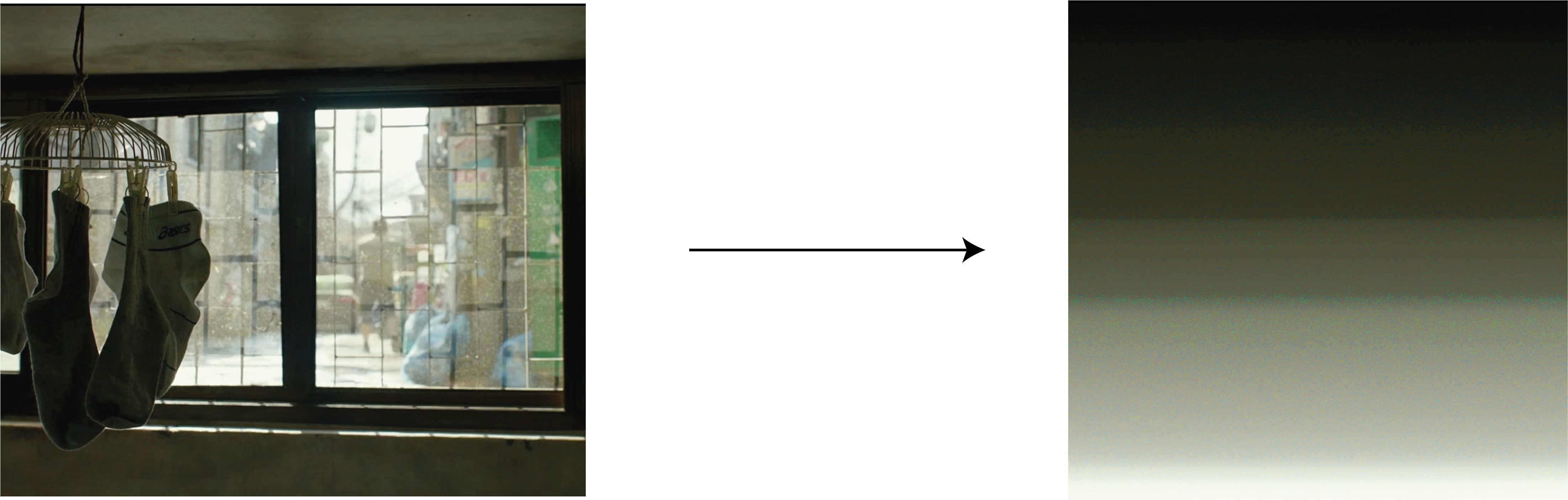
Pixel sorting organizes each pixel by brightness, offering a comprehensive view of the scene's color dynamics and lighting conditions.
Camera Movement
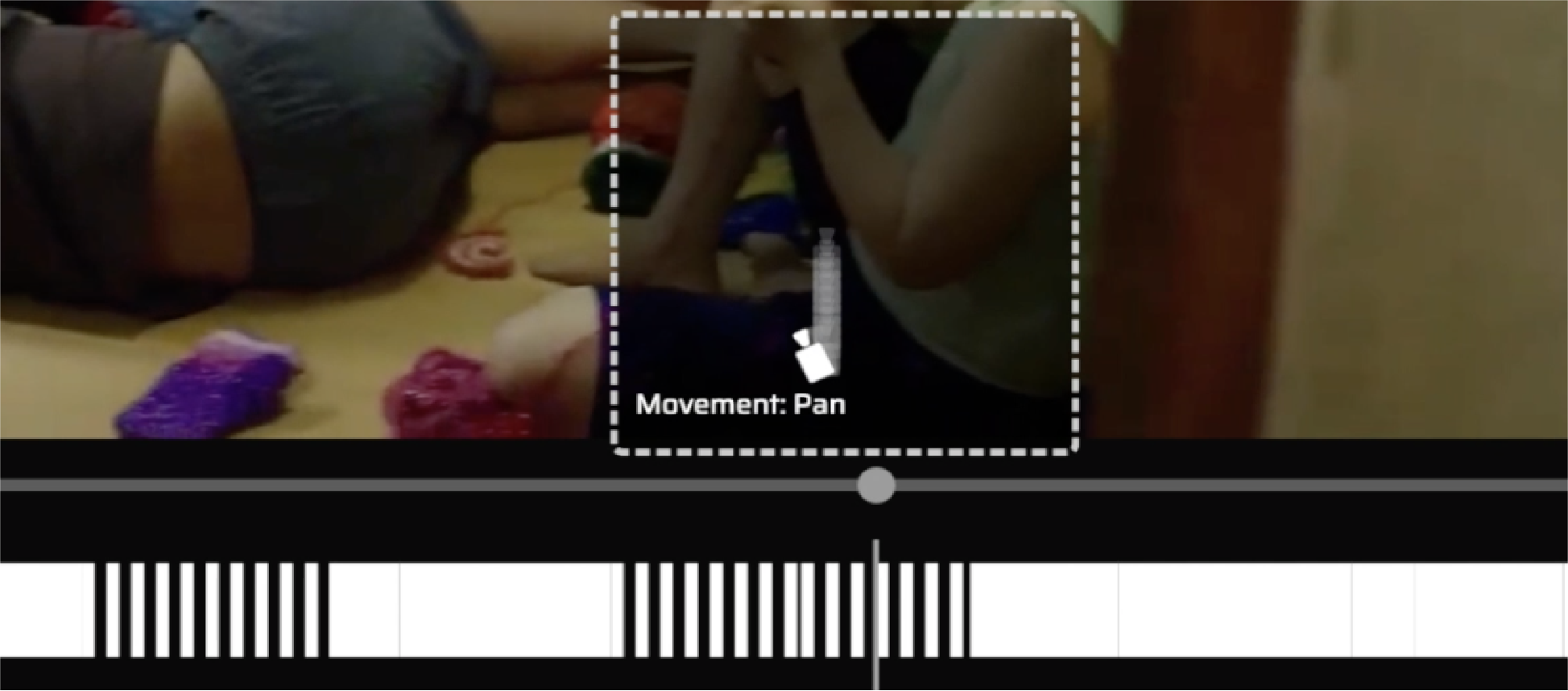
This introduces a camera movement tracker, conceptualized from a bird's-eye view. A camera icon, representing the focal point, navigates across a grid, mirroring actual camera movements. This dynamic progression not only indicates direction but also denotes the distance traversed, with the camera's path marked onto the grid. This trace offers a visual progress of the camera's journey, allowing for detailed movement pattern analysis.
On the timeline panel, camera movement is illustrated on a timeline, employing a simple yet effective coding system. Continuous solid lines mark intervals of camera stillness, whereas dashed lines indicate motion. This alternating pattern effortlessly differentiates active camera movement from static periods, providing viewers with an instant grasp of camera behavior over time.
Script
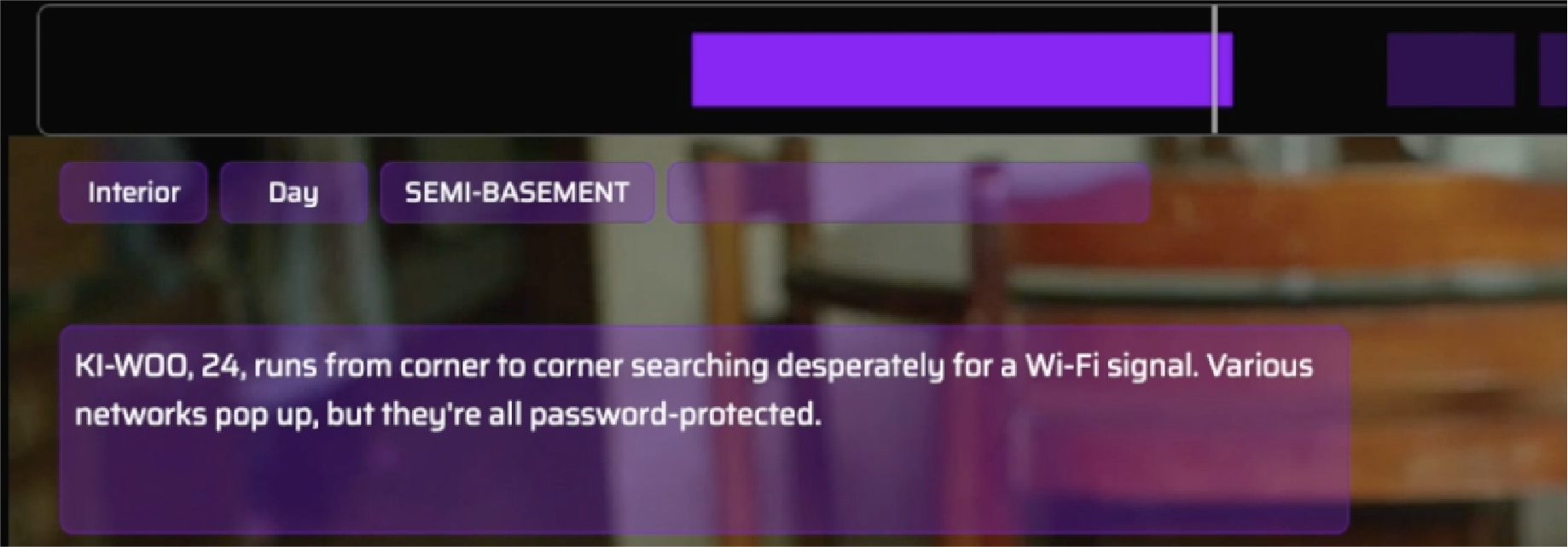
The design incorporates a divided panel: The upper portion houses three rectangular boxes detailing the scene's setting, time, and location based on the script header, while a larger rectangle below displays the action lines.
This layout ensures a dynamic update of the action lines in tandem with the film's progression, while the setting, time, and location remain constant unless changes occur within the narrative. This method achieves a succinct delivery of script details, paralleling the film's visual narrative.
Additionally, a timeline visualization in the Top Timeline Panel complements the On-Screen Annotation. Each bar on this timeline corresponds to an action line from the script, visually representing the narrative sequence and its duration.
Final Design


